
Why Plant-Based?
As a Registered Dietitian Nutritionist (RDN), I am often asked about vegan and vegetarian diets and their benefits to overall health. These terms are often synonymously used with the term “plant-based.” Plant-based diets are defined in the literature as “an eating pattern that emphasizes legumes, whole grains, vegetables, fruits, nuts and seeds, and discourage most or all animal products.1” Consequently, the current obesity rates in the United States (US) are also at an all-time high,2 with 36% of our population presenting with obesity.3 Obesity has several definitions, such as being grossly overweight; presenting with a weight that is higher than what is considered as a healthy weight for a given height; and a Body Mass Index (BMI) of 30 kg/m2.4,5
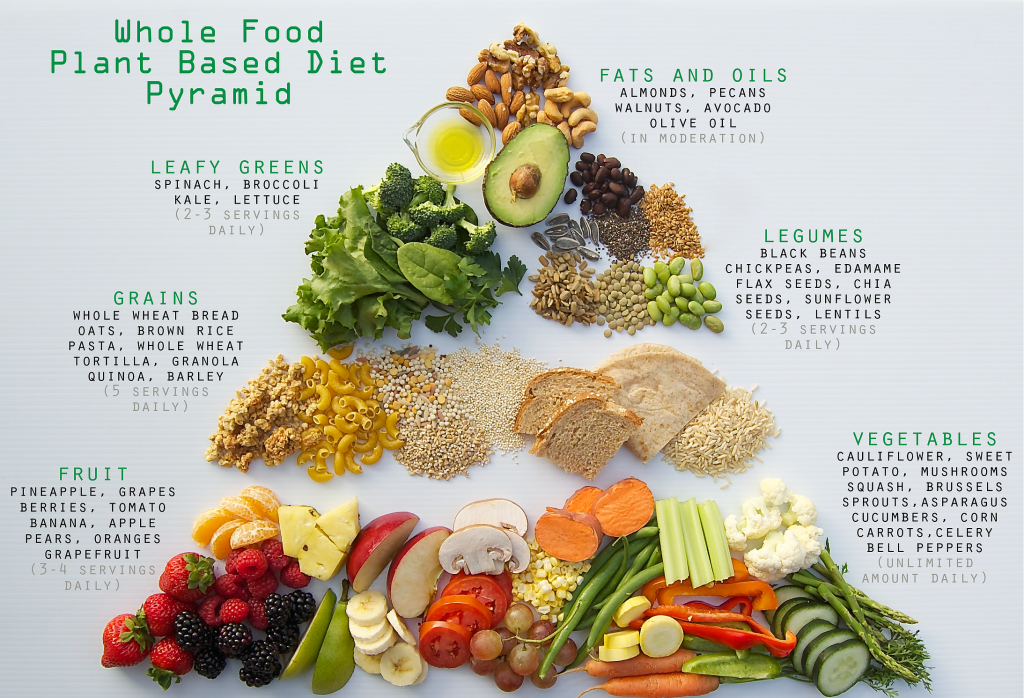
Furthermore, it is important to consider all factors contributing to obesity (genetics, lifestyle, diet, gender, physical/psychological environments, biochemical/physiological factors, etc.); especially the ones we can change.6 Lifestyle are one of the top modifiable determinants of obesity, which is associated with increased risk for non-communicable diseases (NCD), such as cardiovascular disease (CVD), type 2 diabetes, cancer, etc.6,7 A common, modifiable, and recognizable change in lifestyle is a change in diet.
Consuming a plant-based diet can help combat obesity. In addition to supporting sustainable weight management, following a plant-based diet has been associated with several other health benefits, such as death caused by heart disease, reducing dependency on medications, lowering risk for chronic diseases, decreasing the incidence and severity of obesity, hypertension, hyperlipidemia, hyperglycemia, and even possibly reducing advanced coronary artery disease and type 2 diabetes.8
As plant-based nutrition continues to increase in popularity, this blog will allow you to modify your lifestyle through the adherence to a plant-based diet, especially if you are obese. The barriers to obesity are endless. Examples include:
- Time (e.g., just starting off their career, working late for a promotion, work travel/client dinners)
- Convenience (e.g., fast food restaurants, take-out apps, too tired to cook/meal plan, etc.)
- Knowledge gap (e.g., parents always cooked for them, always dined out for dinner, unsure of how to navigate a grocery store, never tried cooking, etc.)
In addition, our built environment (e.g., the man made physical and social elements that make up the structure of a community; examples include walking trails, bike lanes, schools, community centers, sidewalks, etc.) is also not contusive to healthy eating that will assist in weight loss. This includes the price and availability of food, commuting time for work, food “porn” on social media makes us feel hungry when we are not, current marketing/advertising on television, etc.2 These common rationales and built environment also ultimately define the behavior change that needs to occur in order to address obesity.
Excited for our journey together! Stay tuned for more and subscribe below to receive notifications when I post new updates.
Until next time…!
References:
- McMacken M, Shah S. A plant-based diet for the prevention and treatment of type 2 diabetes. eriatr Cardiol. 2017 May; 14(5): 342–354. doi: 10.11909/j.issn.1671-5411.2017.05.009.
- Cohen DA. Obesity and the built environment: Changes in environmental cues cause energy imbalances. Int J Obesity. 2008;32(S7):S137-S142. doi: 10.1038/ijo.2008.250.
- Global health observatory (GHO) data: Overweight and obesity; World Health Organization Web site. https://www.who.int/gho/ncd/risk_factors/overweight_obesity/obesity_adults/en/. Updated 2017. Accessed November 26, 2019.
- Community nutrition. Planning health promotion and disease prevention, 3rd edition. ProtoView. 2017;2017(45).
- Defining adult overweight and obesity. Centers for Disease Control and Prevention Web site. https://www.cdc.gov/obesity/adult/index.html. Updated 2017. Accessed November 26, 2019.
- Asghari G, Mirmiran P, Yuzbashian E, Azizi F. A systematic review of diet quality indices in relation to obesity. Br J Nutr. 2017;117(8):1055-1065. doi: 10.1017/S0007114517000915.
- 10 facts on noncommunicable diseases. World Health Organization Web site. https://www.who.int/news-room/fact-sheets/detail/noncommunicable-diseases. Updated 2013. Accessed November 10, 2019.
- Hever J. Plant-based diets: A physician’s guide. The Permanente journal. 2016;20(3):15. https://www.ncbi.nlm.nih.gov/pubmed/27400178.
 Eating Plants With Sophia